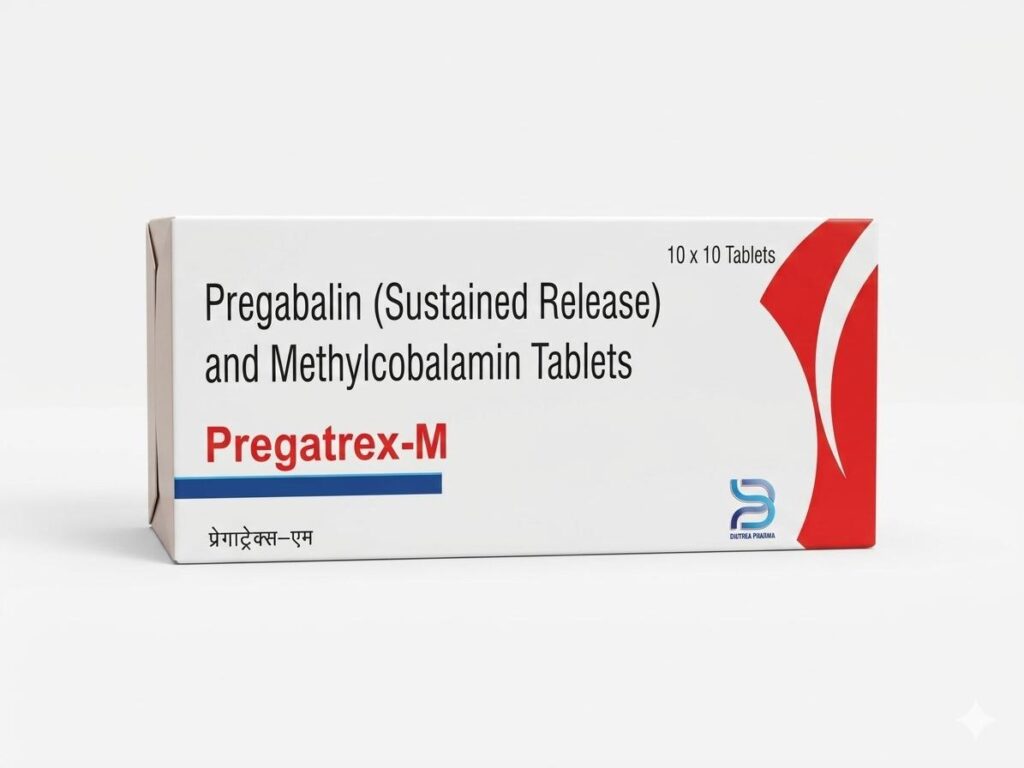
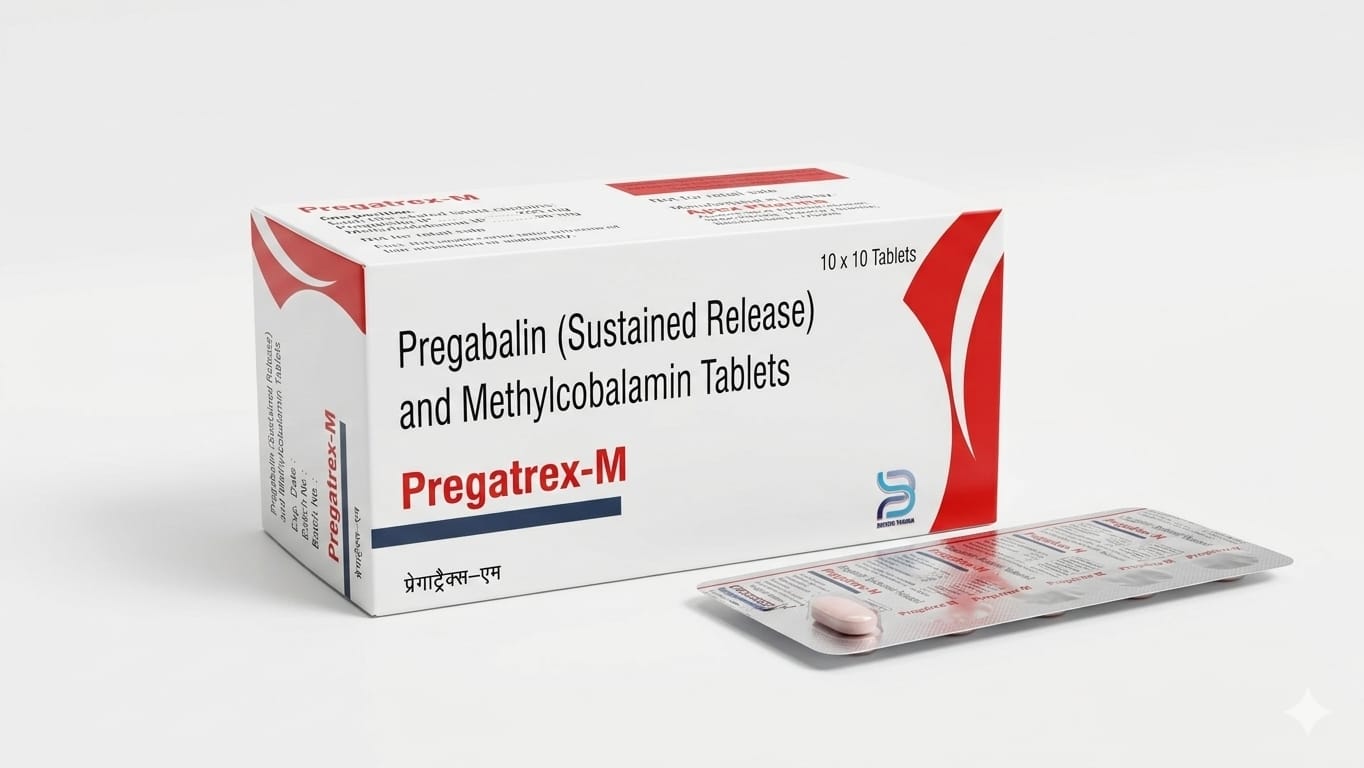
A dual-action neurotrophic and analgesic agent. Pregabalin binds to the alpha-2-delta subunit of voltage-gated calcium channels in the central nervous system, reducing the release of neurotransmitters like glutamate and substance P. Methylcobalamin acts as a coenzyme in the synthesis of methionine from homocysteine, which is essential for the formation of the myelin sheath that protects nerve fibers.
Nerve Regeneration: Actively promotes the repair of damaged neurons by facilitating protein synthesis and myelin sheath formation. Rapid Pain Relief: Provides significant reduction in "burning," "electric shock," and "stabbing" sensations. Quality of Life: Reduces sleep interference and anxiety-related symptoms caused by chronic, debilitating nerve pain.
Generally Prescribed for Following:
Neuropathic Pain: Diabetic peripheral neuropathy and Postherpetic neuralgia (pain after shingles).
Systemic Pain: Fibromyalgia and generalized musculoskeletal nerve pain. Spinal Issues: Sciatica, radiculopathy, and nerve compression syndromes.
CNS Effects: Significant dizziness, somnolence (extreme sleepiness), and ataxia (loss of coordination). Visual: Blurred or double vision (diplopia). Metabolic: Increased appetite leading to weight gain and peripheral edema (fluid retention in limbs). Psychiatric: Occasionally may cause mood changes or confusion in elderly patients.
General Advisories and Critical Avoidances:
Alcohol: STRICT AVOIDANCE. Alcohol synergistically increases the sedative effects of Pregabalin, which can lead to severe respiratory depression.
Lactation: Not recommended unless vital; Pregabalin passes into breast milk.
Avoid: Sudden discontinuation (must taper off to avoid rebound insomnia or anxiety).