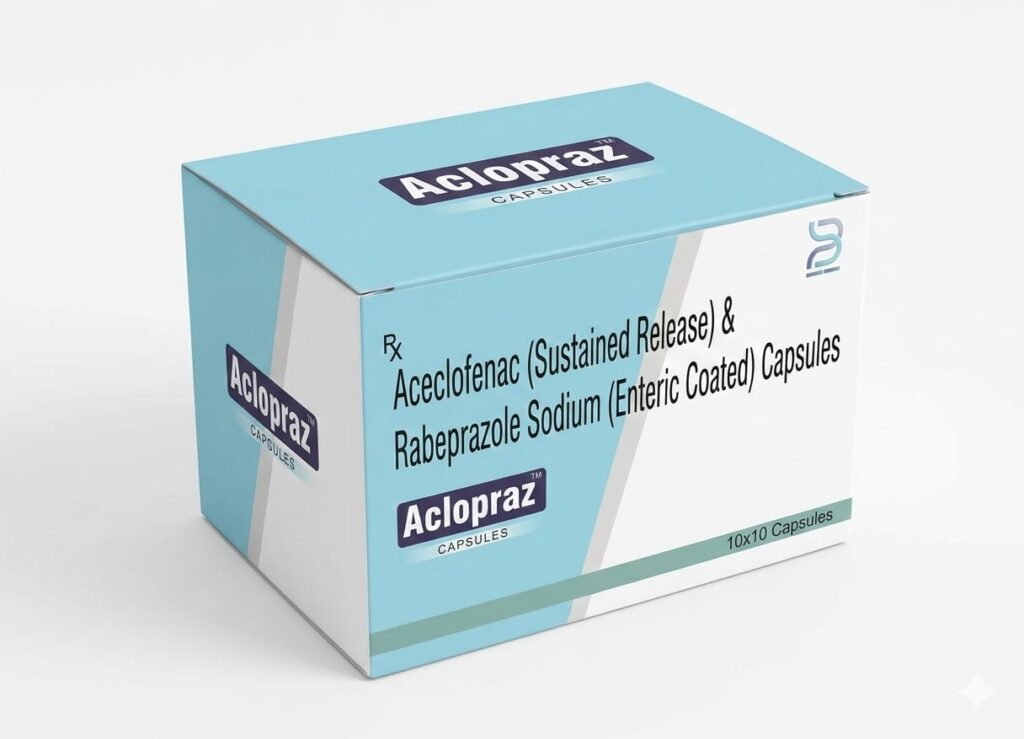
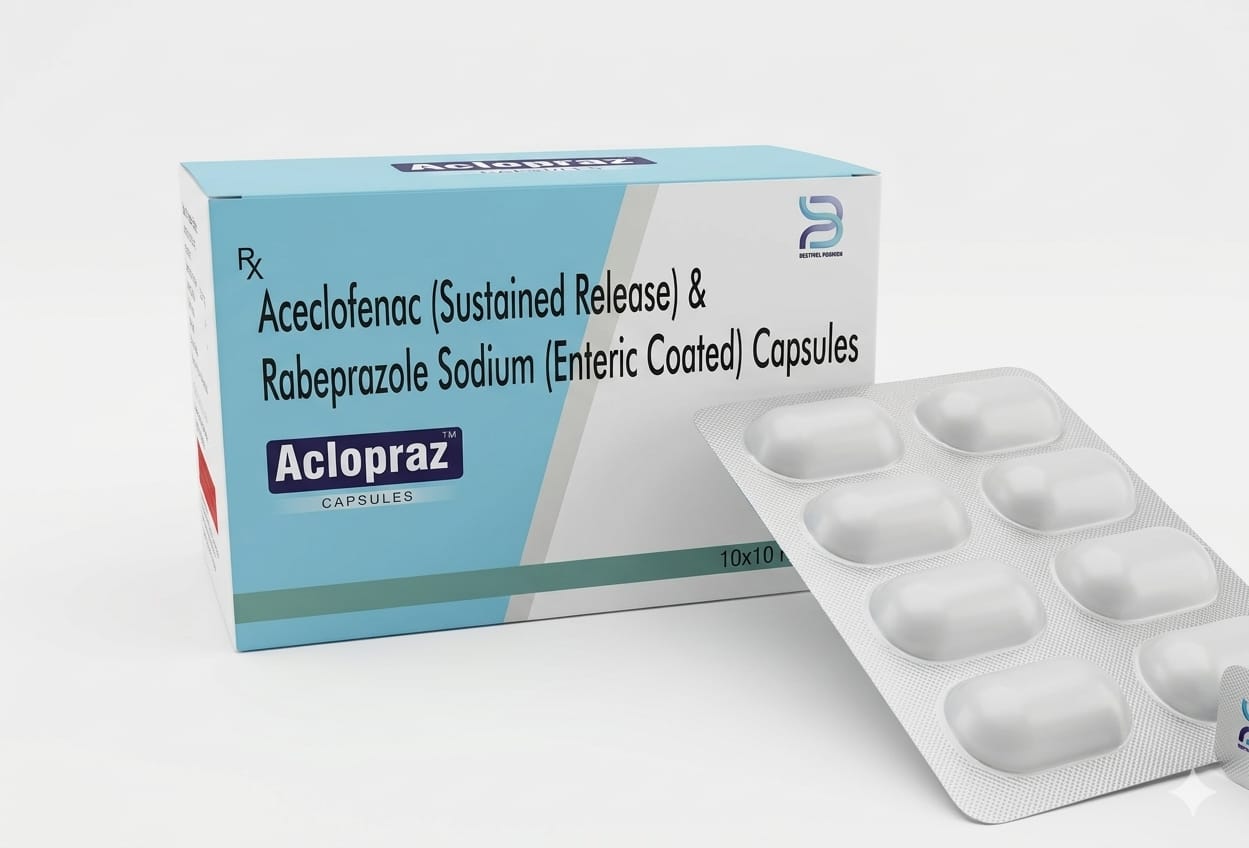
Aceclofenac is a phenylacetic acid derivative that inhibits cyclooxygenase (COX-1 and COX-2) enzymes, halting the production of inflammatory prostaglandins. The Sustained Release (SR) mechanism ensures a steady plasma concentration over 24 hours. Rabeprazole is a substituted benzimidazole (PPI) that irreversibly inhibits the H+/K+ ATPase pump in gastric parietal cells, suppressing acid production to prevent NSAID-induced ulcers.
Extended Pain Control: Single daily dose management for chronic inflammatory conditions. Gastric Shielding: Proactively prevents the "gastritis" and "peptic ulcers" typically associated with long-term painkiller use. Mobility: Reduces morning stiffness and joint swelling, allowing for improved physical therapy outcomes and daily activity.
Generally Prescribed for Following:
Chronic Arthritis: Rheumatoid arthritis, Osteoarthritis, and Ankylosing spondylitis.
Severe Pain: Acute gout, lower back pain, and post-traumatic inflammation.
Post-Surgical: Management of pain and swelling following orthopedic or dental surgery.
Potential Side Effects and Adverse Reactions:
Digestive: Dyspepsia (indigestion), flatulence, and occasional diarrhea.
Systemic: Dizziness, headache, and rare elevations in liver transaminases.
Long-term PPI use: May slightly decrease the absorption of Vitamin B12 and Magnesium with very prolonged use.
General Advisories and Critical Avoidances:
Alcohol: HIGH RISK. Combining NSAIDs with alcohol increases the risk of gastric perforation and occult GI bleeding. Pregnancy: Contraindicated in the third trimester (risk of premature closure of ductus arteriosus). Avoid: Taking with other NSAIDs (like Ibuprofen or Aspirin) as it increases toxicity.